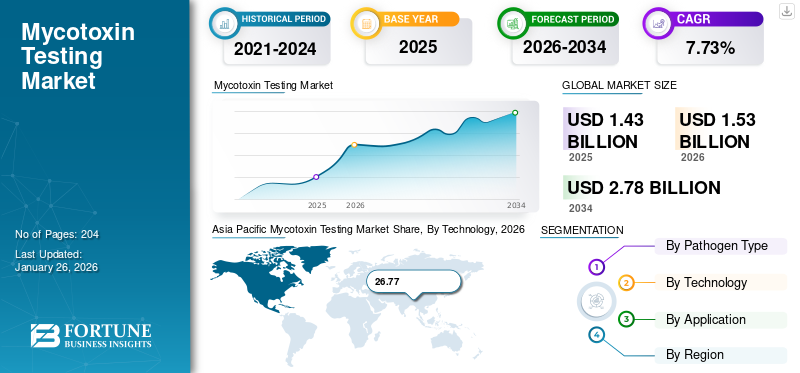
The global mycotoxin testing market is projected to grow from $1.53 billion in 2026 to $2.78 billion by 2034 — a compound annual growth rate of 7.73% — according to industry forecasts. The figures cover the full breadth of mycotoxin assay use, including food and feed safety, agricultural trade, and clinical diagnostics, with growth driven by tightening regulatory frameworks and rising awareness of indoor mold exposure.
Within the clinical segment, demand is being shaped by direct-to-consumer expansion. RealTime Laboratories announced in January 2026 that its 16-mycotoxin at-home urine panel was now available for direct consumer purchase. Mosaic Diagnostics — formerly Great Plains Laboratory — continues to run its 11-mycotoxin MycoTOX Profile through practitioner channels.
The growth comes despite serious unresolved problems with what urine mycotoxin testing actually measures in a clinical context. Urinary panels cannot distinguish between mycotoxins ingested from food — corn, peanuts, coffee, grains — and mycotoxins metabolized after inhaling spores from a water-damaged building. The tests lack validated clinical reference ranges, are not diagnostic for Chronic Inflammatory Response Syndrome (CIRS), and have drawn caution from the CDC. Where food and feed testing is anchored by clear regulatory mandates such as FDA action levels and EU maximum allowable concentrations, clinical urine panels remain a contested space. Major medical bodies have not endorsed urinary mycotoxin testing as a standalone diagnostic for human exposure from buildings, even as integrative practitioners continue to use it.